
There is a pervasive myth in fitness that once you cross the age of 35, your metabolism crashes, your joints inevitably fail, and building muscle becomes a biological impossibility. The fitness industry often treats anyone over thirty like a fragile liability, pushing them toward low-impact cardio and avoiding heavy weights. But the clinical science says otherwise.
Getting fit after 35 isn’t impossible. In fact, if approached intelligently, your late 30s and 40s can be your absolute physical peak. By understanding the metabolic shifts occurring in your body and adjusting your training and nutrition accordingly, you can build a more resilient, muscular, and capable physique than you had in your 20s.
The Biological Challenges: What Actually Changes?
It is important to acknowledge that your body at 38 is not identical to your body at 22. Certain physiological markers do change, and understanding them is the first step to overcoming them:
- Sarcopenia Onset: Starting in your 30s, you naturally lose 3% to 8% of your muscle mass per decade if you are inactive. This directly contributes to a slower resting metabolic rate (RMR), leading to the "sudden" weight gain many experience.
- Hormonal Shifts: Natural testosterone in men and estrogen/progesterone in women gradually decline. While not an immediate cliff, this subtle drop affects the speed of muscle protein synthesis and recovery times.
- Tendon and Ligament Elasticity: Connective tissues become less elastic over time. The "snap back" effect of tendons diminishes slightly, making warm-ups non-negotiable to avoid injury.
Scientific Consensus: The 'metabolic slowdown' associated with aging is largely a myth. Research shows that metabolism remains relatively stable between ages 20 and 60. The decline in metabolism over 35 is mostly driven by a loss of muscle mass (sarcopenia) and decreased daily activity, not a broken biological clock.
The Unfair Advantage: Why 35+ Lifters Dominate
While the physiological challenges are real, athletes over 35 have distinct advantages over their younger counterparts that often lead to better, more sustainable results:
- The Mind-Muscle Connection: With age comes superior body awareness. You are better equipped to feel the target muscle working, reducing 'junk volume' and maximizing mechanical tension on every rep.
- Patience and Consistency: Muscle growth is a long-term project. Older lifters are less likely to program-hop or chase instant gratification, allowing the compounding effects of progressive overload to do their job.
- Resource Availability: Better financial stability often means access to better nutrition, quality supplements, coaching, and premium training equipment.
The Essential Supplements Protocol
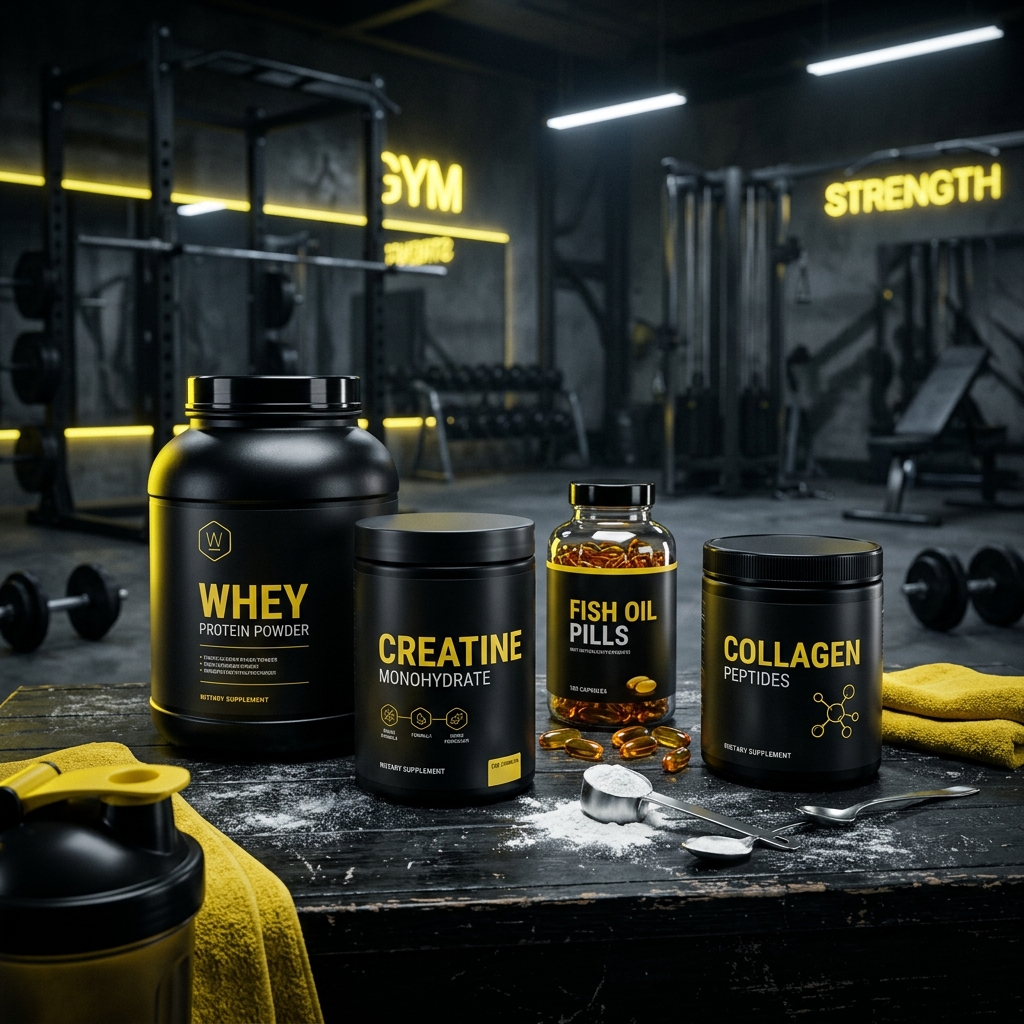
While food and heavy lifting are your foundation, specific evidence-based supplements become highly valuable for mitigating age-related challenges and optimizing recovery:
| Supplement | Mechanism of Action | Why it's Crucial After 35 |
|---|---|---|
| Creatine Monohydrate | Increases ATP production and cellular hydration. | Combats sarcopenia directly by improving strength and high-intensity output, while offering neuroprotective benefits. |
| Whey / High-Quality Protein | Supplies essential amino acids (especially Leucine) for Muscle Protein Synthesis (MPS). | Older bodies experience "anabolic resistance," requiring a higher dose of protein (specifically leucine) to trigger muscle growth compared to younger adults. |
| Omega-3 Fish Oil | Reduces systemic inflammation and improves joint lubrication. | Essential for managing the increased inflammatory response and protecting cardiovascular health and joint integrity. |
| Collagen Peptides + Vit C | Provides building blocks for connective tissue. | Supports the health and elasticity of aging tendons, ligaments, and cartilage, reducing injury risk. |
Training Strategies: Work Smarter, Lift Harder
You can still lift heavy, but your margin for error is smaller. Adopt these clinical strategies to ensure continuous progression without injury:
- Prioritize Recovery Over Volume: You might not be able to recover from 6-day-a-week high-volume splits anymore. A 3 to 4-day full-body or upper/lower split allows for intense mechanical loading with adequate systemic recovery.
- Control the Eccentric: Do not bounce the weight. Controlling the negative portion of the lift (eccentric) builds massive strength and hypertrophy while protecting tendons from sudden sheer stress.
- Track Everything: 'Winging it' doesn't work anymore. You must log your workouts to guarantee progressive overload and avoid accumulating unnecessary junk volume that fries your central nervous system.
Your 30s, 40s, and beyond are not a biological sentence to decline. By leveraging the science of resistance training, respecting your recovery needs, and employing strategic supplementation, you can build an elite physique that defies expectations. Age is just a variable—the principles of tension, effort, and progressive overload remain the same.